
Tools Used by Modern Game Studios

Modern game studios rely on a broad ecosystem of software to turn creative concepts into playable experiences. From early prototypes to polished releases, the right technology can streamline production, improve communication, and help teams manage increasingly intricate projects.
For modern game studios, choosing suitable development software is rarely about finding one universal solution. Instead, teams combine specialized applications for programming, art, collaboration, testing, and production. These tools create a connected workflow where creative and technical departments can operate with greater cohesion.
Essential Tools for Game Studios
A professional studio typically uses multiple categories of software throughout development. Game engines handle interactive systems, art applications produce visual assets, while collaboration platforms keep information synchronized across departments. Together, these tools form the technological backbone of production.
Game development engines
Game engines provide the foundational framework for building games. Popular options include Unreal Engine, Unity, and Godot, each offering tools for rendering, physics, scripting, animation, audio, and scene management. Developers can construct prototypes quickly before expanding them into sophisticated gameplay systems.
The choice of engine often depends on project scope, platform targets, team expertise, and desired visual fidelity. A small independent team might prioritize accessibility, while a large studio may require advanced rendering and extensive production infrastructure.
Art production software
Art teams depend on specialized software for modeling, texturing, sculpting, illustration, animation, and visual effects. Applications such as Blender, Maya, ZBrush, Photoshop, and Substance 3D can transform rough concepts into production-ready assets. Efficient art software also reduces repetitive labor. Procedural workflows, reusable materials, and automated export systems can make asset creation more consistent across a large project.
Collaboration platforms
Game development is inherently collaborative. Project management and communication platforms help programmers, artists, designers, writers, and producers coordinate tasks without losing track of dependencies. Version-control systems are equally important. They allow teams to maintain different iterations of code and assets, review changes, and recover previous versions when problems arise.
Tools for RPG Development
Role-playing games often demand unusually expansive production pipelines. They may contain branching narratives, large environments, elaborate characters, inventories, quests, dialogue systems, and numerous interconnected mechanics.
World building tools
World-building software helps developers construct landscapes, cities, dungeons, interiors, and other explorable spaces. Terrain editors, procedural generation systems, level-design tools, and environment libraries can accelerate the creation of expansive game worlds. For RPG projects, consistency matters. Lighting, scale, navigation, environmental storytelling, and asset placement must work together so that exploration feels deliberate rather than randomly assembled.
Character creation software
Characters are central to RPG experiences. Modeling and sculpting applications enable artists to create distinctive bodies, faces, clothing, armor, creatures, and accessories. Character tools can also support rigging and animation. A well-structured character pipeline makes it easier to reuse animations, customize equipment, and introduce new playable or non-playable characters without rebuilding systems from scratch.
Gameplay development
Gameplay development connects characters, environments, narrative, and mechanics. Developers use programming languages, visual scripting systems, gameplay frameworks, and debugging tools to create combat, quests, dialogue, progression, crafting, and inventory systems. For developers exploring modern tools for game development, modular architecture is particularly valuable. Designers can adjust individual mechanics without destabilizing unrelated systems, making complex RPG production more manageable.
Managing Modern Game Workflows
As projects grow, production can become labyrinthine. Modern game studios therefore need workflows that connect creative production with technical management while preserving traceability.
Asset pipelines
An asset pipeline describes how files move from creation to implementation. A typical pipeline may include modeling, texturing, optimization, export, engine integration, testing, and final approval. Automation can eliminate mundane steps. Naming conventions, validation scripts, batch processing, and automated imports help reduce human error and keep thousands of assets organized.
Team collaboration
Large projects require transparent communication. Task boards, documentation platforms, chat applications, code repositories, and review systems give teams shared visibility into development progress. Regular documentation is especially useful when projects span multiple disciplines. Clear specifications prevent small ambiguities from becoming expensive production bottlenecks.
Performance testing
Performance testing ensures that a game operates within its intended technical parameters. Developers monitor frame rates, memory consumption, loading times, CPU and GPU utilization, network behavior, and other metrics. Testing should occur throughout production rather than only before launch. Early profiling can expose inefficient systems while changes are still relatively inexpensive to implement.
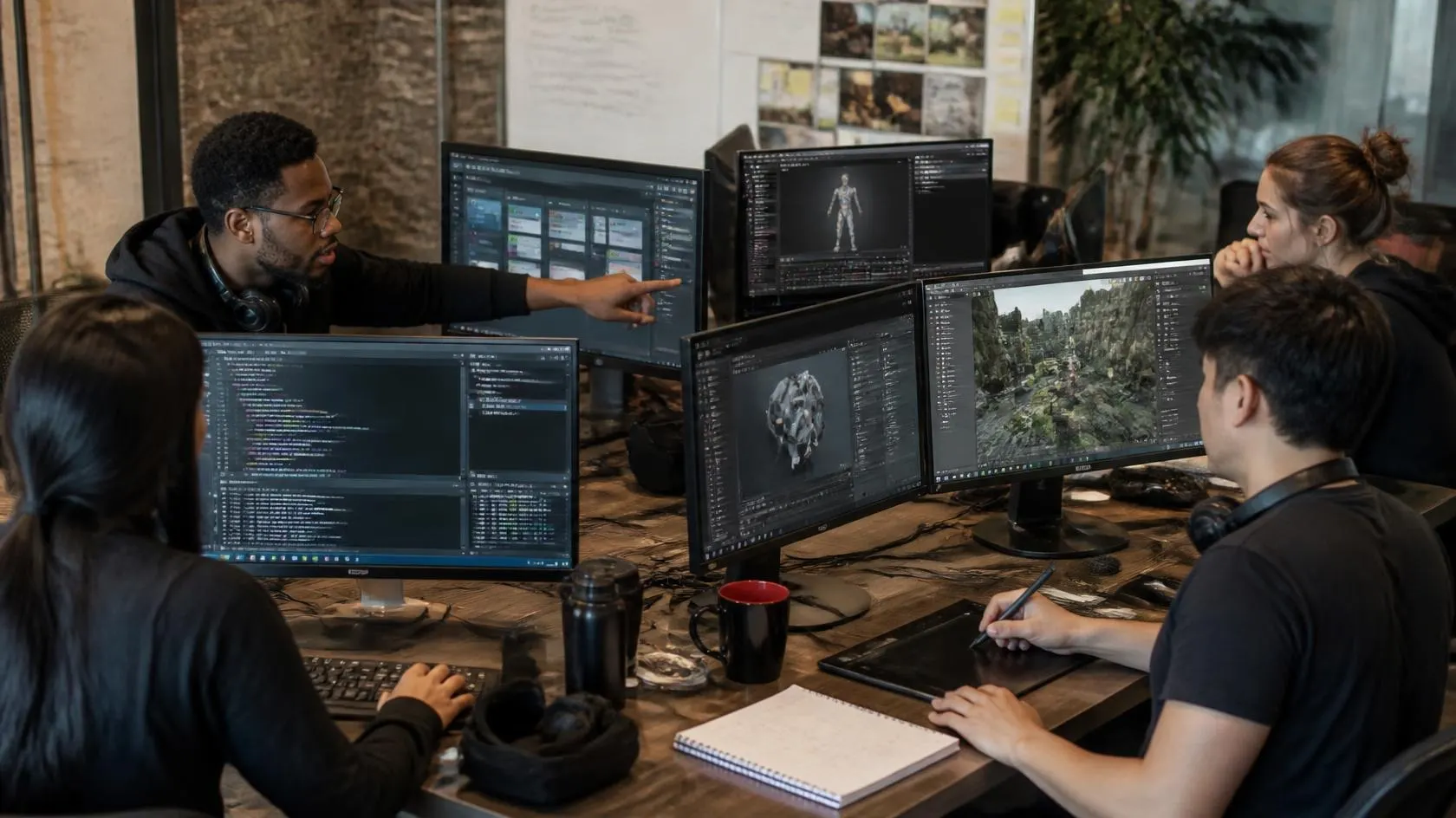
Explore Modern Game Development Tools
The contemporary game-development landscape is remarkably diverse. No single application handles every requirement, particularly for ambitious projects involving sophisticated graphics, expansive worlds, and interconnected gameplay systems. For teams exploring new production methods, the most useful approach is to evaluate tools according to project requirements, team capabilities, platform targets, and workflow compatibility. When these components align, technology becomes more than a collection of applications, it becomes an efficient production ecosystem capable of supporting ambitious creative work.
As game projects continue to evolve, modern game studios will increasingly combine automation, real-time collaboration, procedural techniques, and intelligent development systems. As game designer Shigeru Miyamoto has observed, “A delayed game is eventually good, but a rushed game is forever bad.” The broader lesson is that powerful software works best when paired with disciplined production and thoughtful iteration.


